|
|
Product Description
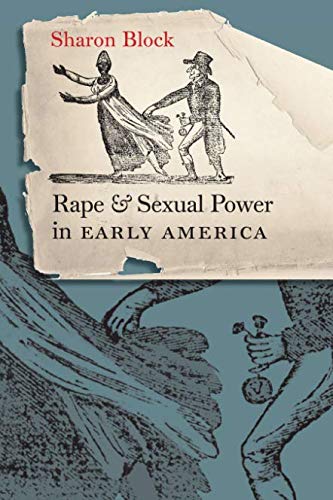
In a comprehensive examination of rape and its prosecution in British America between 1700 and 1820, Sharon Block exposes the dynamics of sexual power on which colonial and early republican Anglo-American society was based.Block analyzes the legal, social, and cultural implications of more than nine hundred documented incidents of sexual coercion and hundreds more extralegal commentaries found in almanacs, newspapers, broadsides, and other print and manuscript sources. Highlighting the gap between reports of coerced sex and incidents that were publicly classified as rape, Block demonstrates that public definitions of rape were based less on what actually happened than on who was involved. She challenges conventional narratives that claim sexual relations between white women and black men became racially charged only in the late nineteenth century. Her analysis extends racial ties to rape back into the colonial period and beyond the boundaries of the southern slave-labor system. Early Americans' treatment of rape, Block argues, both enacted and helped to sustain the social, racial, gender, and political hierarchies of a New World and a new nation.

Customers Who Bought This Item Also Bought
- Laboring Women: Reproduction and Gender in New World Slavery (Early American Studies)
- At the Dark End of the Street: Black Women, Rape, and Resistance--A New History of the Civil Rights Movement from Rosa Parks to the Rise of Black Power
- In the Devil's Snare: The Salem Witchcraft Crisis of 1692
- Dishonorable Passions: Sodomy Laws in America, 1861-2003
- Good Wives: Image and Reality in the Lives of Women in Northern New England, 1650-1750
- The Straight State: Sexuality and Citizenship in Twentieth-Century America (Politics and Society in Modern America)
- Roe v. Wade: The Abortion Rights Controversy in American History, 2nd Edition (Landmark Law Cases and American Society)
- Good Wives, Nasty Wenches, and Anxious Patriarchs: Gender, Race, and Power in Colonial Virginia (Published by the Omohundro Institute of Early ... and the University of North Carolina Press)
- No Constitutional Right to Be Ladies
- Because of Sex
*If this is not the "Rape and Sexual Power in Early America" product you were looking for, you can check the other results by clicking this link
 .
Details were last updated on Mar 7, 2026 11:11 +08.
.
Details were last updated on Mar 7, 2026 11:11 +08.